Early results from our PFAS treatment trials are showing encouraging progress. However, these are preliminary findings, and we need further testing and evaluation before we can determine the right long-term treatment solution for Jersey and understand what it will cost.
Jersey’s drinking water continues to meet current UK and EU standards for PFAS. Our trials are investigating how we could reduce the trace concentrations of these chemicals even further, in preparation for the Government of Jersey introducing PFAS regulation for the Island.
What our trials are showing to date
At Augrès Water Treatment Works, we are testing liquid activated carbon at full scale through our existing treatment process. At higher treatment doses than we would normally use, early results show a 33% reduction in the 48 PFAS compounds we already monitor. These reductions are now being reflected in the drinking water supplied to customers from Augrès Water Treatment Works.
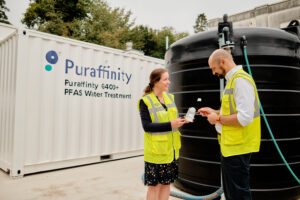
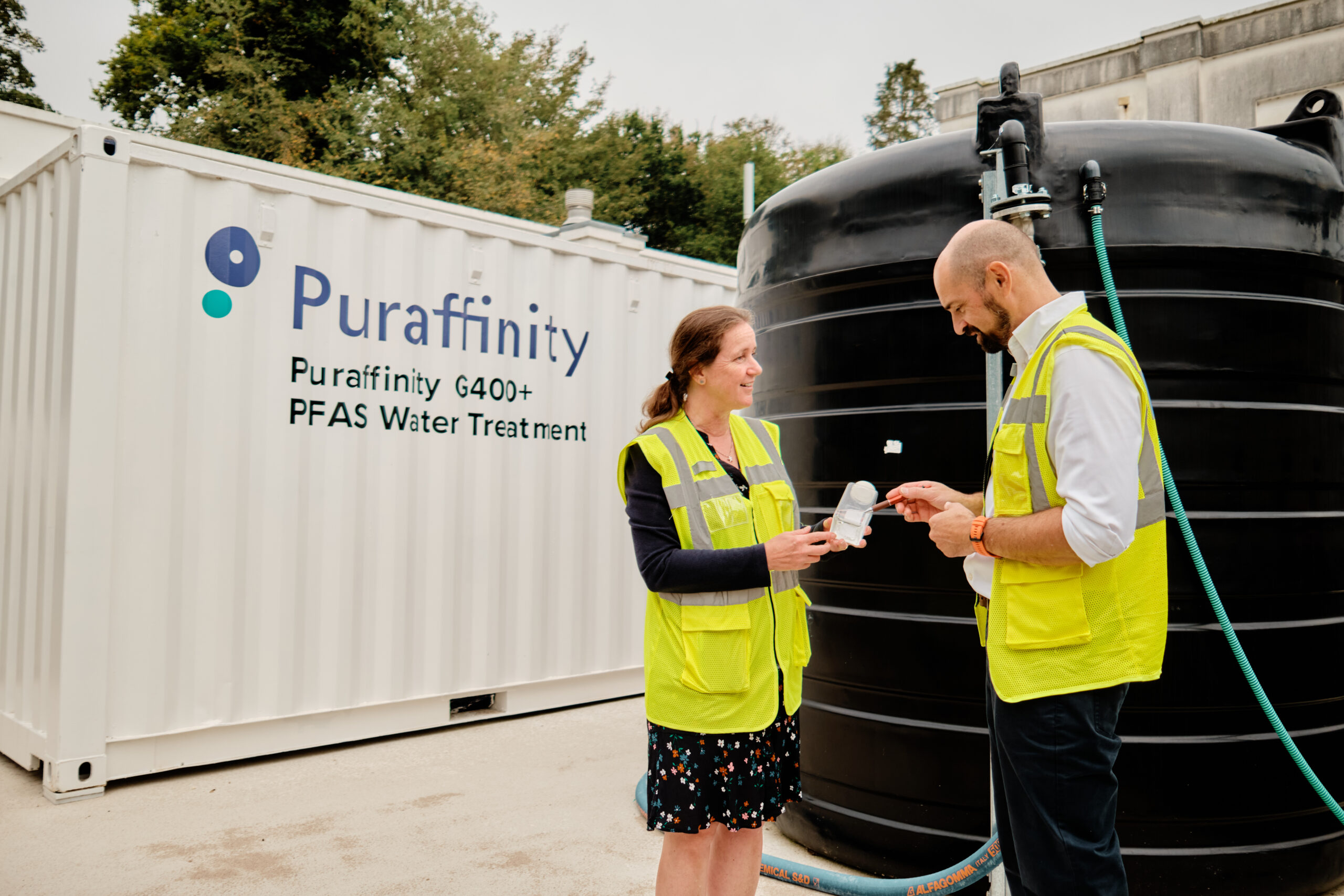
At Handois Water Treatment Works, our smaller-scale pilot trials are testing three technologies:
-
- ion exchange
-
- granular activated carbon
-
- G400+, a newer treatment medium designed specifically to remove PFAS.
The initial results are also promising. They are helping us compare how the technologies perform in a containerised testing environment and assess their potential for future full-scale treatment.
However, the results do not yet show whether any of these technologies can consistently and affordably meet a future regulatory limit at full scale throughout the year.
Why we need more time
Our trials need to run for at least 12 months so that we can understand whether the early reductions in PFAS can be sustained reliably under different seasonal conditions.
Removing PFAS is only one part of the assessment. We are also examining:
-
- how long each treatment medium will last
-
- how waste would be managed and disposed of
-
- operational performance
-
- infrastructure requirements
-
- technical feasibility
-
- the capital investment required
-
- ongoing operating costs
We have committed nearly £2 million to our 2026 and 2027 treatment trials. This investment will help us build the evidence needed to identify the most effective and affordable long-term solution for the Island.
Previous engineering work indicated that meeting a very low PFAS water-quality limit could require a new treatment facility costing approximately £140 million to £210 million, which could mean water bills going up by 70-100%.
Our trials are exploring whether we could achieve the necessary performance through a technically feasible and lower-cost approach.
Preparing for future standards
We also need to consider the developing international understanding of PFAS.
Proposals in Jersey have focused on four PFAS compounds, while the World Health Organisation is evaluating a broader group of 18 compounds of concern as part of its work to inform future drinking-water guidance.
We strongly support the introduction of PFAS regulation in Jersey and want to maintain momentum towards it. However, we believe specific limits should be informed by evidence from our trials, our wider technical and financial evaluations, and international developments. This will help ensure that the solution we ultimately invest in is effective, affordable and adaptable to future standards.
Next steps
Our treatment trials and wider technical and financial evaluations will continue until December 2027, when we plan to share our findings with the Government of Jersey to help inform its approach to future PFAS regulation.
Preliminary results to date
Augrès Water Treatment Works
| Year | Treatment method | 48 PFAS compounds | Four PFAS compounds |
|---|---|---|---|
| 2025 | Standard treatment, average result | 29 ng/l | 12 ng/l |
| 2026 | Liquid activated carbon, average dose of 6 mg/l | 22 ng/l | 5.7 ng/l |
Handois Water Treatment Works
| Year | Treatment method | 48 PFAS compounds | Four PFAS compounds |
|---|---|---|---|
| 2025 | Standard treatment, average result | 34 ng/l | 13 ng/l |
| 2026 | G400+ | Initially 3 ng/l* | Below the limit of detection |
| 2026 | Ion exchange | Below the limit of detection | Below the limit of detection |
| 2026 | Granular activated carbon | Around 1 ng/l on average across six treatment vessels | Below the limit of detection |
*The results in the table above for the three technologies are a like-for-like comparison, based on the same volume of water treated. This shows G400+ achieving 3 ng/l for the sum of the 48 PFAS compounds. However, G400+ treats water much more quickly than the granular activated carbon and ion-exchange systems, so it has progressed significantly further through the trial. It has now treated 28 times more water than granular activated carbon and nine times more than ion exchange. Having treated a much greater volume of water, G400+ is currently achieving a result of 11 ng/l.
Important context for the results
The untreated water currently entering both treatment works is of better-than-average quality, partly because we have been operating our desalination plant during the past two months.
This can make the treatment results appear better than they might be at times when the incoming water contains higher concentrations of PFAS. It is one reason why a full year of testing under different conditions is essential.